Strategic Bankroll Allocation Methods for Enthusiasts Navigating Multi-Game Loyalty Tiers and Reward Cycles

Enthusiasts who participate across multiple casino games often face the challenge of distributing funds in ways that align with evolving loyalty structures and periodic reward offerings, and observers note that effective allocation starts with identifying how each game contributes to tier progression while accounting for payout variances and bonus cycles. Data from regulatory bodies shows that players who segment their bankrolls according to game volatility and loyalty multipliers tend to maintain longer sessions without rapid depletion, particularly when platforms adjust reward rates during promotional windows.
Core Principles Behind Bankroll Segmentation
Allocation methods rely on dividing available funds into portions dedicated to specific game categories, and researchers have documented that assigning 40 to 60 percent of total capital to high-volatility options like progressive slots allows participants to chase tier advancement without exhausting reserves on lower-variance table games. Those who study player behavior indicate that remaining portions support steady play in blackjack or video poker, where loyalty points accumulate at predictable rates and reward cycles reset monthly or quarterly depending on the operator's schedule.
Figures released in early 2026 by the Nevada Gaming Control Board reveal steady growth in loyalty program enrollment, with many enthusiasts now tracking points across slots, table games, and sports betting interfaces on the same platform. This interconnected tracking creates opportunities for strategic shifts, such as moving a portion of funds from one category to another when a new reward cycle begins and bonus multipliers apply to underplayed games.
Adapting to Multi-Game Loyalty Tiers
Loyalty tiers typically escalate through levels that unlock higher cashback percentages, free play credits, and personalized offers, and experts observe that participants benefit from reserving a dedicated allocation slice for games that award bonus points during tier qualification periods. In May 2026 several major operators introduced accelerated earning windows for mid-tier players, prompting enthusiasts to rebalance their bankrolls toward games included in those promotions while preserving core reserves for standard play.
One documented approach involves calculating the points required for the next tier and then apportioning daily or weekly limits accordingly, which prevents overspending in categories that contribute fewer points per dollar wagered. Industry reports from the Australian Gambling Research Centre highlight that structured allocation across three or more game types correlates with higher retention in loyalty programs, as players reach qualifying thresholds without abrupt bankroll drawdowns.
Integrating Reward Cycle Timing
Reward cycles often run on fixed calendars that reset accumulated progress, and those who monitor these patterns allocate larger shares to games featured in the current cycle while tapering exposure to others until the next phase activates. Data indicates that aligning bankroll segments with cycle start dates maximizes the value extracted from free spins or deposit matches, particularly when platforms announce double-point events that coincide with holiday weekends or seasonal campaigns.
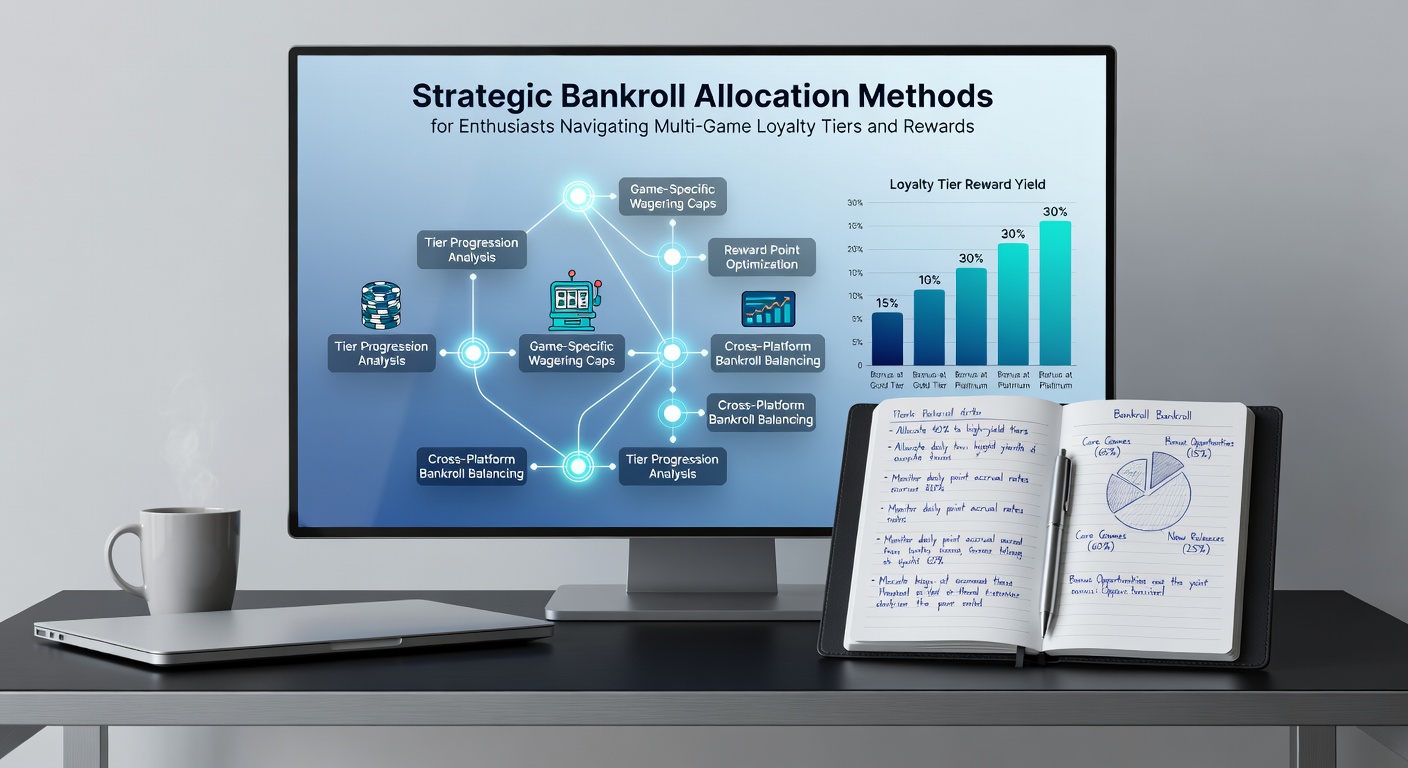
Participants frequently maintain separate ledgers for each cycle phase, which allows quick adjustments if a new promotion favors a previously underfunded game category. Regulatory filings from the Ontario Lottery and Gaming Corporation note that such adaptive strategies appear more frequently among frequent visitors who cross multiple verticals, suggesting that awareness of cycle timing directly influences how capital gets distributed week to week.
Practical Methods in Use
One established method divides the total bankroll into percentage buckets tied to both volatility and loyalty yield, with adjustments made whenever a player advances a tier or a cycle concludes. Another technique uses fixed dollar amounts per game type, scaled according to average session length and point-earning speed, which simplifies tracking for enthusiasts who rotate between live dealer tables and online slot libraries. Observers have recorded that enthusiasts who review allocation ratios at the beginning of each reward cycle maintain more consistent engagement across all available games.
Academic analyses of player data further show that combining these approaches with real-time loyalty dashboards produces measurable differences in session duration and tier completion rates, although individual results vary based on platform rules and personal play frequency.
Conclusion
Strategic bankroll allocation in multi-game environments centers on matching fund distribution to loyalty tier requirements and reward cycle calendars, and available evidence indicates that systematic segmentation supports sustained participation while aligning with operator-driven incentives. As platforms continue to refine their tier structures and promotional schedules, enthusiasts who track these variables maintain clearer oversight of how each portion of their capital contributes to both short-term rewards and longer-term status advancement.